Tuesday, February 10, 2015

Reading Diary B: Tales of a Parrot

Tales of a Parrot


The Frog, the Bee, and the Bird, who Killed the Elephant – I was immediately drawn to this story because of the title. It had a hint of playful mystery that somehow incorporated a frog, bee and bird. Throughout the story, you are introduced to multiple animals known for their wisdom, wit and ability to create strategies, especially the bee bird and frog. The little creatures had a pretty evil plan to kill the elephant. I didn’t realize the violence would escalate so quickly, but they wanted to help out their new friend, the flea, so they did not hold back.

The journey of the day was an eventful one, which made the end of the story quite tasteful. 

Khojisteh wanted to have gone; at that instant the cock crowed and, the dawn appearing, her departure was deferred.”


The Elk and the Ass – By the name of this story, you just know you have to read it! It really did have a helpful lesson in it though. The donkey and elk were grazing in a pasture that did not belong to them so they had to be quiet. The donkey, or ass at this point, didn’t think through the fact that his singing would wake up the master of the house. He belted a tune anyway. The two animals ended up getting caught, but the story doesn’t divulge what happened to them after. The parrot told this story to help his master’s wife in her predicament of accepting a veil of chastity to keep her out of trouble.

Sunday, February 8, 2015

Reading Diary A: Tales of a Parrot

After reading through the Tales of a Parrot unit, I started realizing how common it is for some supernatural being to be apart of the stories. From the Bible Unit to Life of The Buddha and now Tales of a Parrot, it doesn’t matter the context, plot or characters, a God or gods are 
somehow incorporated.


Miemun and Khojisteh:After reading this first story of the unit, I was immediately infatuated by the idea of a wise and almost mischievous parrot. The words and thoughts of the small bird were so complex and eloquent that I knew the two together, man and bird, would be a great combination.

There were two words I actually learned from reading this little snippet. I had never heard of the words “hun” and “spikenard” so I left the story with a larger vocabulary!

Khojisteh and theParrot: This story immediately turned for the worse! But it was so unexpected that I actually enjoyed reading it all the way through. Even though the poor sharuk died a horrible death of being beaten by the woman, the surprise of the act made me more curious as I continued to read.


The Story of theParrot of Ferukh Beg: I learned the meaning of another new word, “sagacious,” which means shrewd or good judgment. This word was used to describe another parrot in Ferukh Beg’s household. I can respect the little fellow for not wanting his master to divorce his wife for her affair while he was gone for a year and a half, but marriage needs to be all about honesty so I wish he went ahead and said something.

Friday, February 6, 2015

Famous Last Words Week 4

This week has been pretty great concerning my work, classes and my personal life! To start off, I will tell you about work at Serve Denton. I’ve only been working 10 hours a week because of their funds. Due to additional work they need done though, they are now letting me work 12 hours a week. Not that that is much of a jump, but it still means I get to do more design work and get paid to do it.


With school, I had my first online test this week for my Introduction to Marketing class. I made a 100%, so I was very excited about that! I’ve noticed when some of my classes start picking up, the other ones slow down, which is great news for me. I guess my teachers are catering their schedules to mine!

In this Mythology and Folklore class specifically, I have really enjoyed writing the Storytelling blog posts because I get to truly test my brain’s creativity. My best work for this class is probably my Introduction for my final Storybook project. I wrote it from the perspective of God. With God being a common character in all of the original stories, I thought it would be an easy transition to make Him the narrator in all of my stories about the Bible women. This was a new style I used that I had not experimented with before in the class.

Many of the stories I read that come across as successful are the ones that give pertinent details. Sometimes details are added that build the characters or plot that do not match the story. More details are usually always better than none, but sometimes they can clutter a story and hide the purpose behind the writing.


With my personal life, my fiancé and I started our second week of pre-marital counseling, which has been a great addition to my Thursdays. It makes me confident for our marriage that we have been so honest about our lives upfront that there is very little I feel uncomfortable talking to him about.

Wednesday, February 4, 2015

Essay: Week 4 Overview

In the first week, I was planning on reading about Buddha in the Life of the Buddha because I wanted to explore other religions this year. While the stories were foreign to me, I resonated with many of the values. Coming from a Christian background and reading through two of the Bible units so far, I was surprised by so many of the similarities with the origins and teachings. There were plenty of differences as well, but that I was expecting.


Some of my favorite stories were Maya’s Dream, Birth of Siddhartha and The Tree of Knowledge. I think I chose these because they sounded so close to Bible stories that I initially wanted to compare and contrast them.

This goal was pleasantly surprising because like Jesus, Buddha came from God or the gods in a vision or dream. Mary the Mother of Jesus received a vision from an angel that informed her that she would give birth to the Messiah. In Buddha’s story, his mother, Queen Maya, had a dream from the gods that informed her that she would be giving birth to a son. She felt an overwhelming peace about it all, which gave her hope for her son’s purpose in the world.

This unit doesn’t really fit seamlessly into my overall goal for this class in terms of my final project, but for my life outside of school, I wanted to learn more about Buddha. My project ideas for this class are surrounded by religion (mainly by Bible women and different creation stories), so this unit doesn’t fit under either one of those subjects. I am sure Buddhism has a creation story of its own, but this unit did not touch on that aspect of Buddha’s life.


There wasn’t anymore background I really wanted or need to know to be able to comprehend the stories, but like I said in the earlier paragraph, it would have been nice to know more about the creation story connected to the religion centered on Buddha.

Storytelling for Week 4: The Dream

While sleeping soundlessly in her champers, Queen Maya experienced the most magnificent dream that elated her spirits as she awoke. The dream must have been from the gods because an extreme amount of peace covered her soul, mind and body as she lived out her dream during her sleep. However, this wondrous thought made a turn for the worse as she continued on her day. As the saying goes, be careful what you dream for.

Due to her restful sleep, her bedding stayed pristine. Queen Maya woke up with escalated energy levels, so she decided to head to her husband’s office headquarters in the castle. Their home was made of the purest gold and could house close to a 1,000 people with the amount of room is encompassed.

Stepping out of her immaculate bed and slipping on her house shoes, she rushed to her husband, King Suddhodana, to tell him her dream. She began to explain, but became unsure of what she was about to say. Her dream had slipped her mind in the midst of her excitement.

Beating her head with her hands, she tried to remember the picturesque scene in the dream to help her remember the purpose of it all.

“Tap, Tap, Tap, “ went her knuckles to her pale forehead.

King Suddhodana, now annoyed by her interruption, dismissed her from his office, for he had a meeting with the King of Japan within the hour.

Queen Maya pleaded, “You have to believe me when I say I have never experienced this much serenity in my lifetime. Please, give me time to remember the dream. I long to tell you.”

Navel-gazing, she left his headquarters and headed toward her chambers to sit and ponder. After sifting through ideas for a couple of hours, she thought of one that might work!

“Wala!” Queen Maya exclaimed. I will enter my sleep again and the dream will come back to me.

At the same time, King Suddhodana had finished his stressful meeting, and decided to take a nap before he had to present an award just after lunch time. The king and queen had separate sleeping chambers, so the king headed to the third wing on the second floor, far away from his wife.

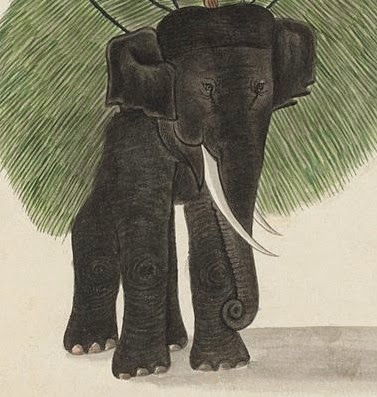
As they both simultaneously entered their sleep, the dream re-entered Queen Maya’s mind. She remembered the elephant, the gods, her pregnancy, once again. The gods were telling her she would give birth to a son, who would bring peace to the whole world. Standing on a cloud, she looked over her left shoulder to see her husband making his way toward her cloud. With their eye’s locked; they both understood what their future held. They would become the parents of the Buddha. But the price of his existence was for Queen Maya to die during childbirth, a sacrifice she needed to make to help save the world.


The dream became the most frightening blessing.


Author's Note: I created this story after being inspired by Maya's Dream in the Buddha unit. The original story is about Queen Maya having a dream from the gods about giving birth to the Buddha and telling her husband, King Suddhodana. For my version of the story, I decided to focus strictly on the first few paragraphs and make it more of a mystery of what all the dream entailed. The couple then meets in the dream. 

Bibliography: This story is part of the Buddha unit. Story source: The Life of Buddha by Andre Ferdinand Herold (1922). Maya's Dream. Mythology and Folklore UN-Textbook.

Monday, February 2, 2015

Reading Diary B: The Life of Buddha

The Life of Buddha

Siddhartha the Hermit: This story has so many beautifully written sentences that describe settings or truths. Instead of just talking about dawn or a horse, Buddha uses descriptive words, so unusual, that they catch the reader’s attention. For example, to describe dawn, the author starts off the story by saying, “When the sun finally peered between the eyelids of night.” Later on, Buddha gives a helpful, profound teaching. He says, “Unhappiness is born of desire; that man it to be pitied who is a salve to his passions.” This is such a counter-cultural stance in our society because we are taught to please ourselves in order to gain happiness, whether that is through success, money or perfection. This instead teaches that feeding your fleshly desires is the demise to a happy life.


The Tree of Knowledge: Many of the miracles in this story seem to be experienced or granted for convenience instead of to show the glory of Buddha. Some of the other miracles could belong to a fairy tale because of the good vs. evil theme. This is especially true when Mara, the Evil One, raised the banks of the pool to prevent Buddha from escaping and then Buddha prayed to the Goddess that lived in the tall tree on the bank to help him climb out.


Siddhartha Becomes the Buddha: There was one large paragraph in the story that almost threw me off because of the repetition and complexity, but at the end, it concluded that ignorance is at the root of old age and death. While I had to think on this for some time, I think this makes some sense in relation to Buddhism. From the start of humanity, men and women were ignorant, which means they needed something more powerful than themselves to save them from the darkness within them.

Sunday, February 1, 2015

Reading Diary A: The Life of Buddha

The Life of Buddha


I had wanted to explore this unit from the first week because one of my New Year’s resolution to explore different religions in order to increase my knowledge base.

Maya’s Dream: This story tells about the beginning of Buddha’s life, which all started with a dream from Queen Maya. Going from the Biblical Unit last week to the Buddha Unit, I see quite a few similarities and differences. For example, an angel came to Mary the Mother of Jesus to tell her she would bare a son named Jesus who would be the Messiah. Buddha’s mother was approached in a very similar way–through a dream–to find out about the identity of her son. With Buddha living inside his mother’s stomach, she had healing powers over people and nature. Throughout Jesus’ ministry, he performed miracles, but only in the last three years of His life, which is a difference.

Birth of Siddhartha: Queen Maya seemed to have some connection with trees because she was continually fascinated by their beauty and splendor. After reading the birth story of Buddha, the whole world seemed like a utopia at the time. Nothing in nature or society was evil or unhappy.

Asita’s Prediction: I thought the term gifted to Buddha from the gods was odd – destroy the evil of rebirth. I am unsure if this means reincarnation or something else. In the Christian Bible, the purpose of the text is centered on being rebirthed into our new life of purity, so it is something we desire, not something we want to be destroyed.


I find it sad that Asita, the priest, was unable to know his (Buddha) message and his (Buddha) law, but it might not be revealed until Buddha ages.